

Student Visa Rules for Remote Freelancing in Singapore
Confused about remote work on a student visa? We clarify what counts as freelancing, the strict visa rules, and how to stay compliant while earning.
The question we hear most often in the common room isn't about food or transport. It is: "Can I do that online gig without getting in trouble?" The short answer is: it depends entirely on who the client is and how the work is classified. Many students assume that because they are sitting in their room in Singapore, the work is local. That assumption is dangerous and often wrong. Understanding the fine line between study, hobby, and employment is critical for your visa status and your future career plans.
What Actually Counts as Work?
Under Singapore’s student visa regulations, the definition of "work" is broader than many international students expect. It is not just about receiving a salary in Singapore dollars. It includes any activity that is remunerative or professional in nature. If you are providing a service or creating content for compensation, it is generally considered work. This includes graphic design for a local company, coding for a startup in the US, or even managing social media for a friend’s business. The location of the client does not automatically make it safe. If the activity is professional and paid, it likely falls under the umbrella of employment, which is strictly prohibited for full-time student visa holders unless specific part-time conditions are met. We often see students who treat their laptop as a second job, only to realize they have been operating in a legal gray zone for months. It is better to clarify these rules before you sign your first contract.
There is a distinct difference between academic work and commercial work. Writing an essay for your module is study. Writing a blog post for a client’s website for money is commercial activity. The intent to earn income is the primary trigger. If you are doing it for fun, with no expectation of payment, you are generally safe. But the moment you invoice someone, you cross a line that requires careful navigation. We recommend treating any paid digital activity as a potential employment scenario until you have confirmed its status with the relevant authorities.
The Gray Area of Remote Contracts
Remote work complicates things because the labor happens in Singapore, but the employer might be elsewhere. This creates a jurisdictional headache. If you sign a contract with a company in another country, are you working in Singapore? The student visa is issued on the condition that you remain a student. Your primary purpose is to study, not to operate as a remote employee. Even if the work is for a foreign entity, performing the labor while physically present in Singapore on a student pass can be interpreted as working in Singapore. This is a common misconception. Many students believe that if the money lands in their home country bank account, it doesn't count. However, the physical act of working within Singaporean borders is what matters to the immigration authorities. We have seen cases where students were flagged for inconsistent activities, not because of the amount earned, but because the nature of the activity was clearly professional. It is a risk that is not worth taking without proper clearance. If you are unsure, the safest path is to pause the work until you have a definitive answer. Your academic record and visa integrity are far more valuable than any freelance income.
- Check if your course requires a specific work experience component.
- Verify if the activity is for personal portfolio building or client compensation.
- Ensure the client is not a Singaporean entity unless authorized.
- Keep records of all contracts and payments for transparency.
- Consult the immigration department before starting any paid remote work.
- Avoid using student visa status as a loophole for full-time remote employment.
On-Campus Employment vs. Freelancing
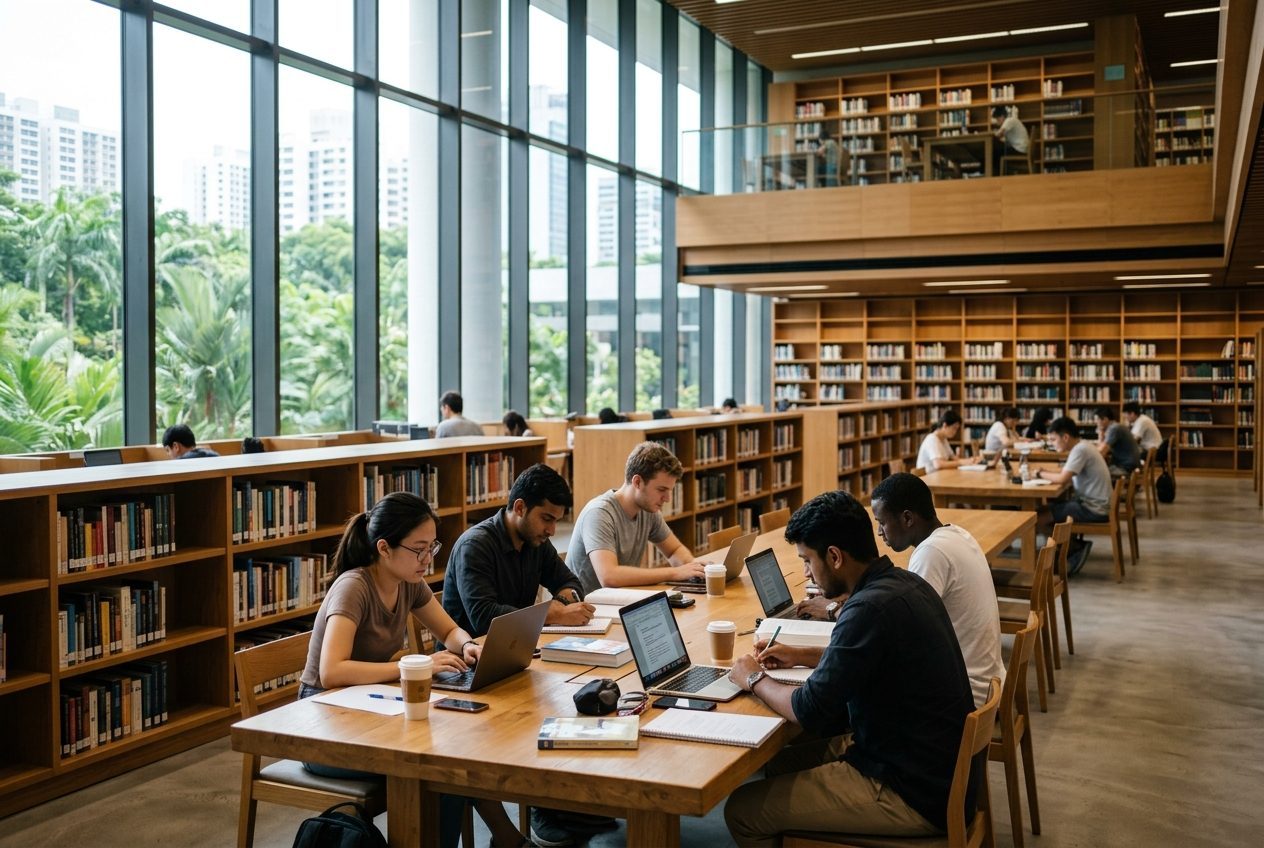
There is a clear, sanctioned path for students to earn money: part-time on-campus work. Most polytechnics and universities allow students to work a limited number of hours per week, provided they have a valid work pass. This is different from freelancing. On-campus jobs are usually with the institution itself or approved partners. They are structured, supervised, and explicitly permitted. Freelancing, on the other hand, is unstructured and often lacks the oversight of an employer. This makes it harder to prove compliance. If you take a part-time job at the library or a student center, you are following the rules. If you start a side hustle selling digital templates on a marketplace, you are operating outside those rules. The distinction matters because on-campus work supports your student status, while unauthorized freelancing can undermine it. We encourage students to explore the official career services at their institutions. They often have listings for approved part-time roles that are safe and legitimate. These roles also provide valuable local work experience, which is a huge advantage for your post-graduation job search. It is a practical way to earn income without touching the legal red lines.
Practical Tips for Staying Compliant
If you are passionate about creative work or coding, you can still pursue your interests without violating visa rules. The key is to separate your hobby from your income. You can build a portfolio, post on social media, and network freely. These activities are generally considered personal development, not work. However, do not invoice clients or accept payment for these services while on a student visa. Wait until you graduate and switch to a work pass or employment pass. At that point, you can monetize your skills legally. In the meantime, focus on using your time in Singapore to build connections and gain insights. The network you build now is worth more than the freelance income you might miss. We often advise students to use their student years for skill acquisition and cultural immersion. The financial gains from remote work are rarely significant enough to justify the visa risk. Your long-term career in Singapore depends on a clean immigration record. Protect that record by staying within the boundaries of your student status. For more advice on balancing study and personal projects, you can read our more student life guides. They offer practical insights from students who have navigated these same questions.
Frequently Asked Questions
Can I receive payment from overseas clients?
Receiving payment does not change the nature of the work. If you are performing professional services for compensation while physically in Singapore, it is considered work, regardless of where the funds are sent. The location of the labor is the determining factor.
Is blogging considered freelancing?
Personal blogging for a portfolio or academic purpose is generally safe. However, if you are writing sponsored posts or accepting payment for content creation, it crosses into commercial activity and may require a work pass.
What happens if I am caught working illegally?
Violations can lead to visa cancellation, deportation, and a ban on future entry to Singapore. It is a serious matter that can impact your academic and professional future, so compliance is essential.
We understand that the rules can feel restrictive, but they are designed to protect your status and ensure a fair environment for all students. If you are looking for a safe place to focus on your studies and explore Singapore, we are here to support you. Our rooms are fully furnished and secure, giving you the space to concentrate on what matters. We provide airport pickup to help you settle in smoothly, and our team offers 24/7 support for any questions you might have. If you are ready to find a home that supports your student journey, you can browse our rooms or leave us a message to ask us anything. We are here to help you succeed.
Latest articles



Comments
Questions or tips of your own? Join the conversation.
No comments yet — be the first to share your thoughts.