
Singapore MRT Guide: Mastering Public Transport for Students
Navigate Singapore like a pro with our essential MRT guide. Learn about lines, fares, etiquette, and why living near a station matters for students.
Stepping off the plane in Singapore, the first thing you'll notice is how efficient and clean the city is, but the real magic happens underground and above ground with the train network. For international students, mastering the Mass Rapid Transit (MRT) is the key to freedom, allowing you to explore the island, reach your campus on time, and enjoy your social life without the stress of traffic. At Sing Stay & Care, we've helped thousands of students settle in since 2015, and we know that understanding public transport is the first step toward feeling like a local.
Understanding the MRT Network and Lines
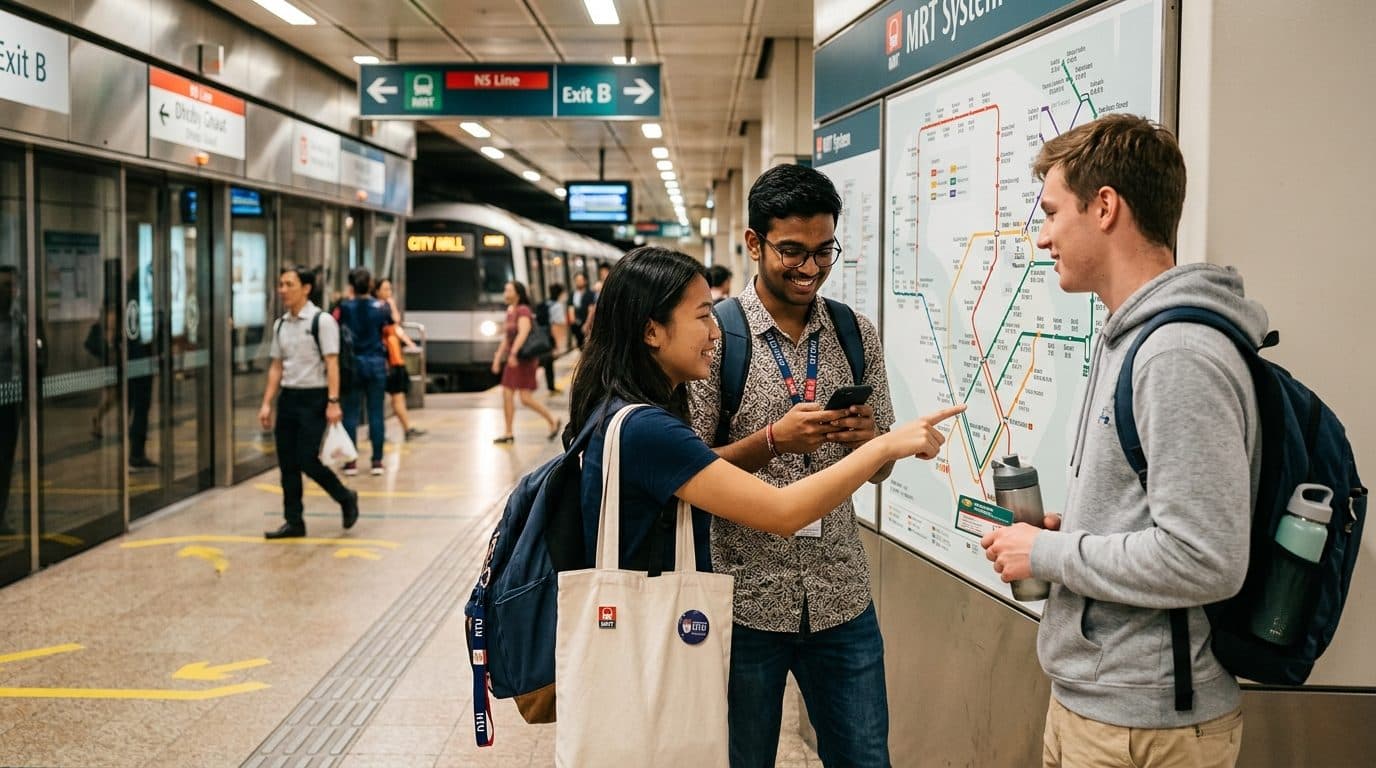
The Singapore MRT is a rapid transit system that serves as the backbone of the city's public transport. It is color-coded and numbered, making it relatively easy to navigate once you know the basics. The network consists of several major lines that crisscross the island, connecting residential areas, commercial hubs, and educational institutions. The most prominent lines include the North-South Line (NSL) in red, the East-West Line (EWL) in green, the North-East Line (NEL) in purple, the Circle Line (CCL) in teal, and the Thomson-East Coast Line (TEL) in orange.
Each line serves different parts of the island. For instance, the North-South Line connects the northern residential towns to the central business district and the southern coast, while the East-West Line runs from the west to the east, passing through many major universities and student towns. When planning your route, pay attention to the color and letter codes on the maps; they are consistent across station signage, train displays, and mobile apps. Understanding which line passes near your university and your potential accommodation is crucial for a smooth daily routine.
How to Pay for Rides and Get a Card
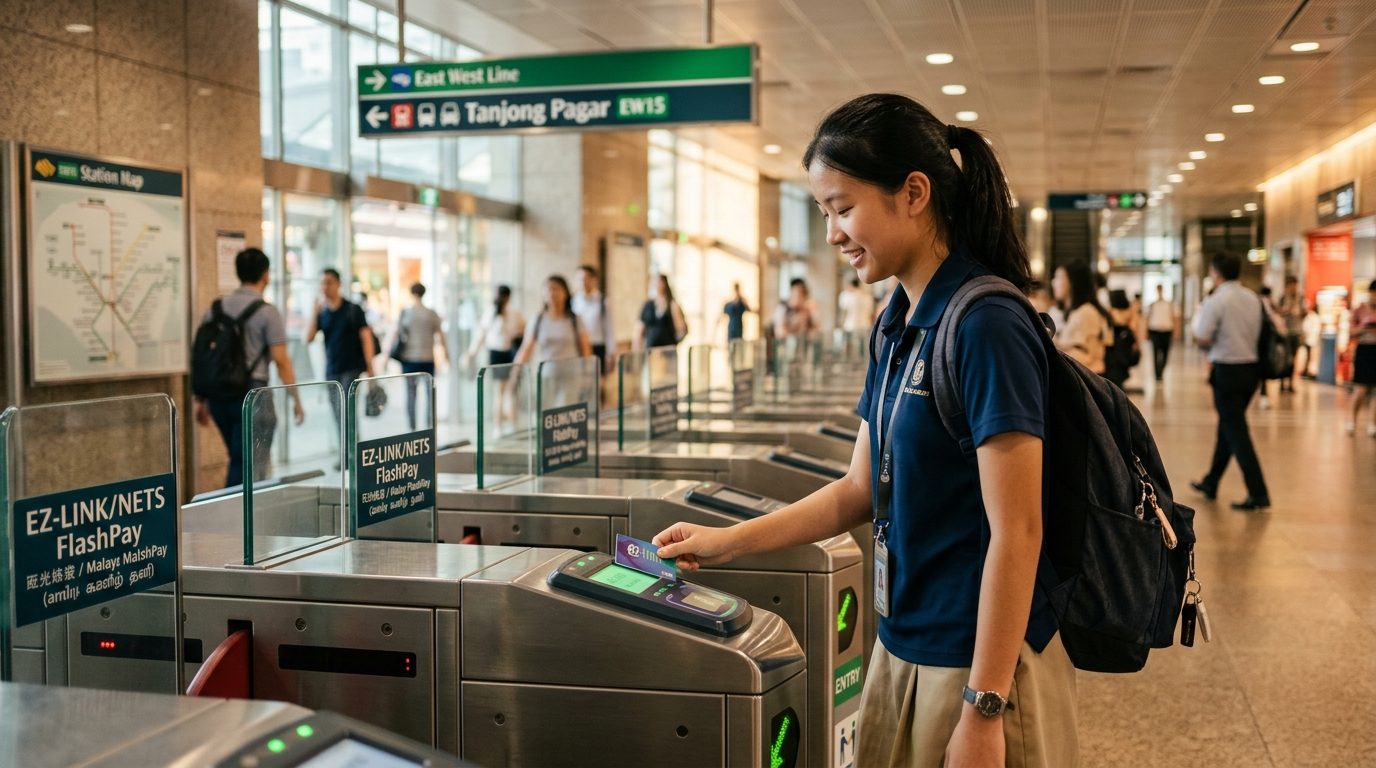
Getting around Singapore is incredibly convenient because you don't need to buy paper tickets every time you travel. Instead, the system relies on contactless payment methods. The most common method for students is the EZ-Link card, a reusable stored-value card that you tap in and out at the turnstiles. You can purchase and top up this card at any MRT station kiosk, convenience store, or via mobile apps. Alternatively, many students now use their contactless credit cards or mobile payment wallets directly at the gates, which is even simpler as it requires no top-up.
Fares are calculated based on the distance traveled, meaning a short trip within the city center will cost less than a long journey from the outskirts. The cost is generally affordable for students, typically ranging from a few cents to a dollar or so per trip depending on the distance. It is important to remember to tap out at your destination; failing to do so will result in a maximum fare deduction. If you are new to the system, don't worry about making mistakes—the station staff are usually very helpful in resolving any tapping issues you might encounter.
Navigating Peak Hours and Etiquette
Like any major city, the MRT experiences peak hours when crowds are at their heaviest. These times typically occur in the morning between 7:30 AM and 9:00 AM as students and commuters head to campus or work, and in the evening between 5:30 PM and 7:30 PM when everyone returns home. During these times, trains can get very crowded, especially on the lines connecting major residential areas to the city center. If you are not in a rush, you might consider leaving your campus a bit earlier or later to avoid the crush.
Singaporeans take pride in their orderly public transport system, and there are a few unwritten rules of etiquette that everyone follows. First, always let passengers alight from the train before you board. Once inside, move towards the center of the carriage to make space for others. It is considered polite to offer your seat to the elderly, pregnant women, or those with disabilities. Additionally, eating and drinking are strictly prohibited on the MRT trains and in the station concourses to maintain cleanliness. Finally, keep your voice down and avoid taking up too much space with your luggage, as this helps everyone travel more comfortably.
Planning Your Route to Campus
One of the most practical skills for a student in Singapore is knowing how to plan your route efficiently. There are several tools available to help you do this, including the official MyTransport.SG app and various third-party navigation apps. These tools allow you to input your starting point and destination, providing you with the fastest route, the number of transfers required, and the estimated travel time. They also offer real-time updates on train delays or service disruptions, which can be a lifesaver during unexpected events.
When choosing accommodation, one of the most critical factors is proximity to an MRT station. Living within a short walking distance of a station can save you valuable time every morning and evening, especially if it rains, which is common in Singapore. A home near a station also means you are better connected to the rest of the island, making it easier to explore different neighborhoods, visit libraries, or meet friends in other parts of the city. We often advise our students to prioritize locations with direct train access to their university to minimize commute stress.
Essential MRT Checklist for New Students
To help you get started on the right foot, here is a quick checklist of things to do before and during your first few days of using the MRT:
- Purchase or activate your EZ-Link card or set up a contactless payment method on your phone.
- Download a reliable transport navigation app like MyTransport.SG or Google Maps.
- Identify the specific MRT lines that connect your accommodation to your university campus.
- Learn the locations of the nearest MRT stations to your new home.
- Familiarize yourself with the map to understand where the peak hour crowds are likely to form.
- Remember the etiquette: tap in and out, offer seats to those in need, and do not eat on the train.
- Plan your first trip during off-peak hours to get a feel for the system without the rush.
- Check for any service updates or planned engineering works that might affect your route.
Frequently Asked Questions
Is the MRT safe for international students at night?
Yes, the MRT is generally very safe to use at night. The stations and trains are well-lit, monitored by CCTV, and patrolled by security personnel. However, it is always good practice to stay aware of your surroundings and keep your belongings secure, just as you would in any other city.
What happens if I lose my EZ-Link card?
If you lose your EZ-Link card, you can report it immediately at any MRT station ticketing office. If the card was registered, you may be able to recover the stored value, but if it was not registered, the balance is usually non-refundable. This is why it is highly recommended to register your card online or at a station as soon as you get it.
Can I use the MRT to go to the airport?
Yes, the East-West Line has a dedicated branch that connects directly to Changi Airport Terminal 1, 2, and 3. This is a convenient and cost-effective way to travel between the city and the airport, especially if you are traveling with light luggage. The train runs frequently, making it a reliable option for catching flights.
Living in Singapore is an exciting adventure, and getting comfortable with the MRT is a big part of that journey. At Sing Stay & Care, we understand how important a stress-free commute is to your academic success and overall well-being. That's why we carefully select our student accommodations to ensure they are within easy reach of major MRT stations. If you are looking for a safe, fully furnished room that puts you right in the heart of the action, we invite you to browse our rooms today. We are here to support you every step of the way, from the moment you land with our complimentary airport pickup to your daily life with our 24/7 caring support. If you have any questions about transport or finding a home, please leave us a message, and our friendly team will get back to you promptly. For more tips on settling in, check out our more student life guides.
Latest articles



Comments
Questions or tips of your own? Join the conversation.
No comments yet — be the first to share your thoughts.