
Singapore Arrival Checklist: Your First Week Abroad
Stress-free moving to Singapore? Use our arrival checklist Singapore guide for documents, SIMs, and settling in during your first week abroad.
You might believe that moving to Singapore is a high-pressure race against time where one small mistake ruins your entire academic year. The truth is, the first week is actually about slow, steady wins rather than sprinting through a mountain of tasks. We have seen hundreds of students arrive feeling overwhelmed by a to-do list they created before even landing, only to find that the city is surprisingly manageable once you take a breath. Let's walk through a calm, realistic plan for your arrival checklist Singapore that focuses on what actually matters.
What to Carry in Your Hands, Not Your Luggage
Before you even think about the flight, consider what documents you need to have physically accessible in your carry-on bag. Losing these in checked luggage can turn a simple arrival into a bureaucratic nightmare. The immigration officers at Changi Airport need to see your passport, your student visa pass (if you have one issued), and your letter of acceptance from your institution.
We also strongly advise printing a copy of your accommodation confirmation. While digital copies are usually fine, having a physical sheet with your address and the phone number of your host can ease the mind of the immigration officer and help you explain where you are going. Do not overpack your carry-on with clothes or gadgets; keep it light and document-heavy. A small notebook and pen are also worth mentioning. You will be filling out forms, and it is always nicer to write with a real pen than to fumble with a phone charger in a crowded queue.
Stepping Off the Plane: SIM Cards and Connectivity
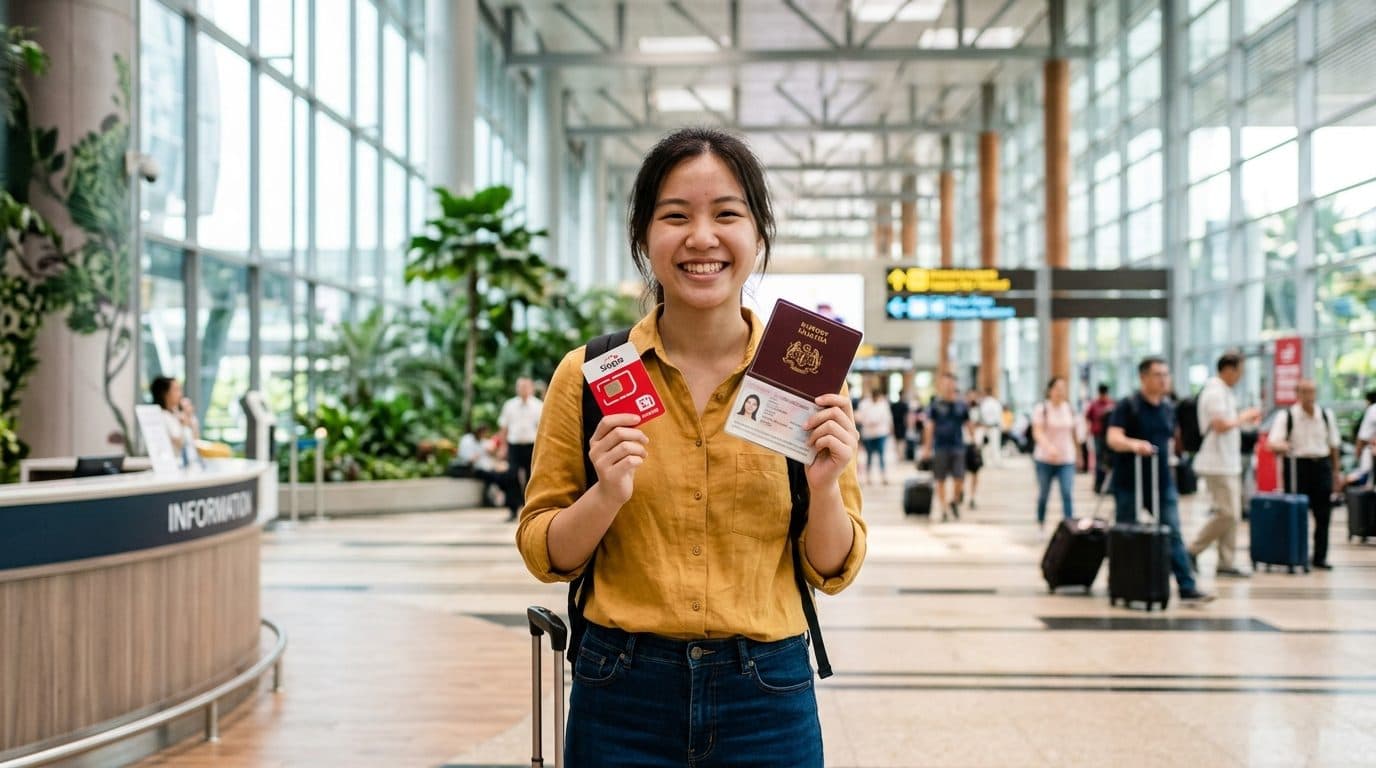
One of the most common worries students have is how to stay connected the moment they land. You do not need to buy a plan back home that costs a fortune. At the Changi Airport arrivals hall, you will find counters for major local telcos. Buying a tourist SIM or a student starter pack here is incredibly efficient and often comes with generous data limits.
Do not wait until you reach your room to get a SIM card. You will need data immediately to navigate the city, show your location to your host if they are meeting you, and set up your banking apps. A local number is also often required for verification codes from various services. Keep the packaging of your new SIM card until you have activated it, just in case you need to swap the chip or return it, though this is rarely necessary. The staff at these counters are used to international students and speak excellent English, so do not be shy about asking for the best deal for a student.
Getting Around: The EZ-Link Card and Public Transport
Once you have your phone and SIM card sorted, your next priority is getting from the airport to your home. The MRT and bus network here is world-class, but you need a way to pay. The EZ-Link card is the standard transport card, though many students now use contactless credit cards or mobile wallets directly at the gates.
If you prefer a physical card, you can buy one at the airport kiosks or at any MRT station. Top it up with a small amount of money, maybe around ten to twenty Singapore dollars, to get you started. Do not try to memorize the map on your first day; instead, download the official transport app on your phone. It gives you real-time arrival times and helps you plan routes. The system is intuitive, but the heat and humidity can make walking between stations feel like a marathon if you are not prepared. Take the escalators, keep water with you, and remember that the trains are clean, safe, and run frequently even late at night.
Settling Into Your Room: Small Wins for Week One
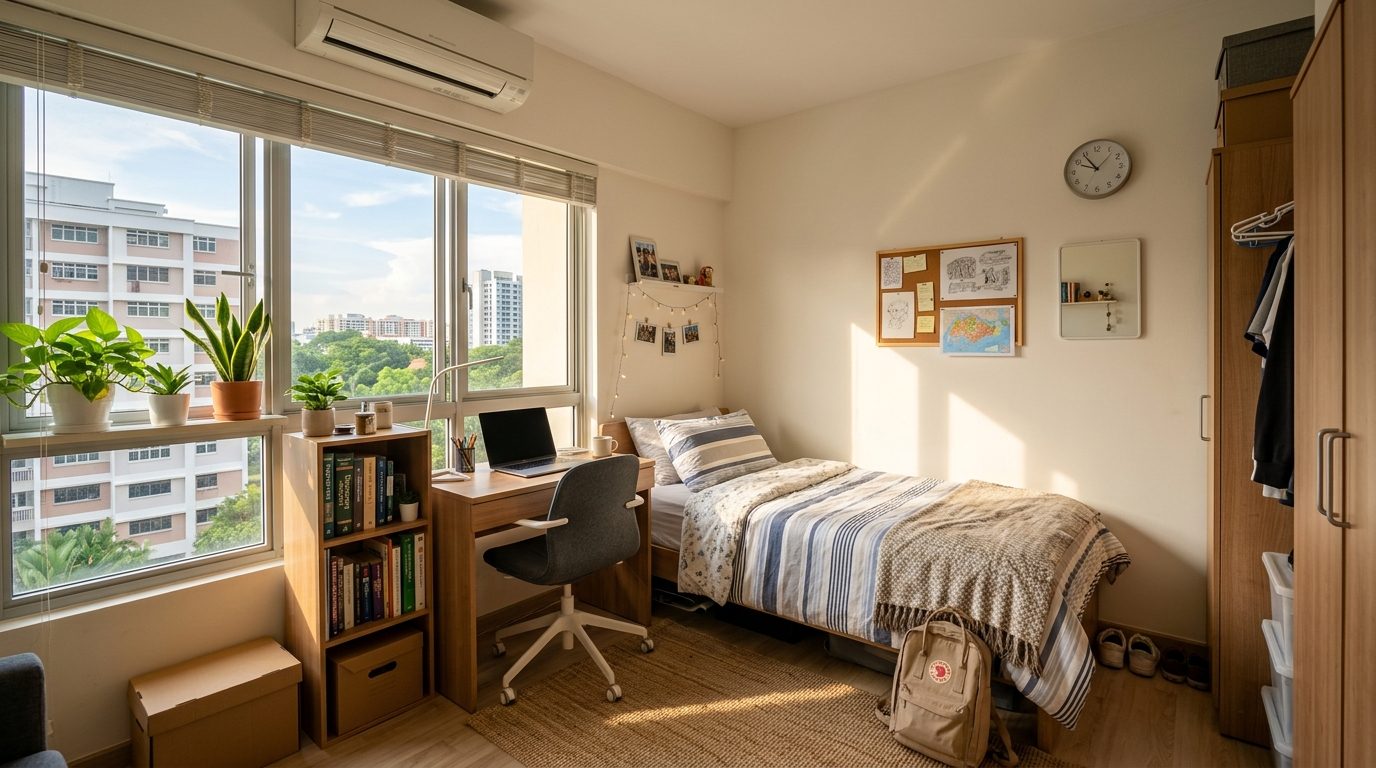
Arriving at your student accommodation is a moment of relief, but it can also feel a bit surreal. You might feel a mix of excitement and exhaustion. This is the perfect time to focus on small, practical wins that make the space feel like home. First, unpack your bedding and hang up your clothes. A messy room creates a messy mind, so getting these basics sorted immediately helps you feel settled.
Check that all the amenities in your room are working. If you notice a lightbulb is flickering or the air conditioner is making a strange noise, report it to your support team right away. Do not wait until the end of the week. At Sing Stay & Care, we want to know about these things so we can fix them before they become a nuisance. Take a moment to explore your common areas. If you are living in a shared flat, introduce yourself to your neighbors. A simple hello can turn a stranger into a friend who can help you find the best nearby food stalls later in the week.
Registering with Your School and Local Essentials
While settling in, do not forget the administrative side of moving to Singapore. Your school will likely have a specific orientation schedule or a portal you need to log into. Set aside a specific hour on your second or third day to handle this. Having a quiet spot and a stable internet connection is key. If you are unsure about the process, check the student handbook or contact the international student office directly.
Here is a quick checklist of the essential items and tasks to complete during your first few days to ensure you are ready for the week ahead:
- Activate your local SIM card and test your data connection.
- Register your address with the school administration if required.
- Set up a local bank account or ensure your international card works at local ATMs.
- Buy a reusable water bottle and a lightweight umbrella for sudden rain.
- Locate the nearest pharmacy and grocery store to your room.
- Test your room's amenities and report any maintenance issues immediately.
- Download local food delivery apps to understand the dining landscape.
These tasks might seem mundane, but completing them gives you a sense of control. You will find that once these boxes are ticked, the fear of the unknown fades, and the excitement of your new life takes over. For more tips on navigating daily life here, check out our more student life guides which cover everything from cooking in a shared kitchen to finding the best study spots.
Frequently Asked Questions
Do I need to register with the police or immigration after arrival?
Most students on a Student's Pass do not need to register with the police immediately upon arrival, but you must ensure your pass details are updated with your school and the Immigration & Checkpoints Authority. Always check your specific visa requirements as rules can vary slightly depending on your country of origin and course duration.
Is it safe to walk alone in Singapore at night?
Yes, Singapore is consistently ranked as one of the safest cities in the world. You can walk alone at night with little worry, but it is still wise to stay in well-lit areas and be aware of your surroundings, just as you would in any major city.
Can I work part-time while studying here?
International students on a Student's Pass are allowed to work part-time during semester breaks, but there are strict limits during the academic term. You must check with your school and the Ministry of Manpower to understand the specific regulations that apply to your visa status.
Your first week in a new country is a blend of logistics and emotions. It is normal to feel tired, confused, or even a little lonely, but remember that this is just the beginning of a wonderful chapter. We are here to support you every step of the way, from the moment you land until you graduate. If you are planning your move or need a safe, welcoming home, we invite you to browse our rooms to see where you could call home. We offer fully furnished spaces, reliable airport pickup, and 24/7 caring support to ensure you never feel alone. Feel free to leave us a message with any questions, and let's make your journey to Singapore as smooth as possible.
Latest articles



Comments
Questions or tips of your own? Join the conversation.
No comments yet — be the first to share your thoughts.