
SIM Card Singapore: Student Mobile Plans Guide
New to Singapore? Compare prepaid vs postpaid SIM card Singapore options. Learn document needs, eSIMs, and how to save on data.
What You Expect Versus What You Get
Many students arrive in Singapore expecting to walk into a shop, flash their passport, and walk out with a fully loaded phone in ten minutes. The reality is often a bit more bureaucratic, with strict ID checks and a confusing array of plan types that can make your head spin. We see this first week confusion often at our hostels, where new arrivals stress about staying reachable while trying to settle into their new rooms. The good news is that getting a SIM card in Singapore is straightforward once you know the rules. It is not about finding the cheapest option blindly, but rather finding the plan that matches your actual lifestyle and data habits.
Prepaid Versus Postpaid: Which Fits Your Student Life?
The biggest decision you will face is choosing between prepaid and postpaid mobile plans. Prepaid options are the most popular choice for international students, and for good reason. They require no credit check and no long-term commitment, which is perfect when you are on a temporary student visa. You simply top up your balance whenever you need more data or minutes. If you run out of credit, your service stops until you add more funds. This gives you total control over your spending and prevents any surprise bills at the end of the month.
Postpaid plans, on the other hand, offer higher data allowances and sometimes better network priority. However, they usually require a local credit history or a significant security deposit. For a newcomer without a local employment history or a Singaporean guarantor, getting a postpaid line can be a headache. You might be asked to pay a deposit ranging from several hundred to over a thousand Singapore dollars. Unless you are planning to stay in Singapore for several years and build a credit score, a prepaid plan is almost always the smarter move for your first few years.

Documents You Actually Need to Buy a SIM
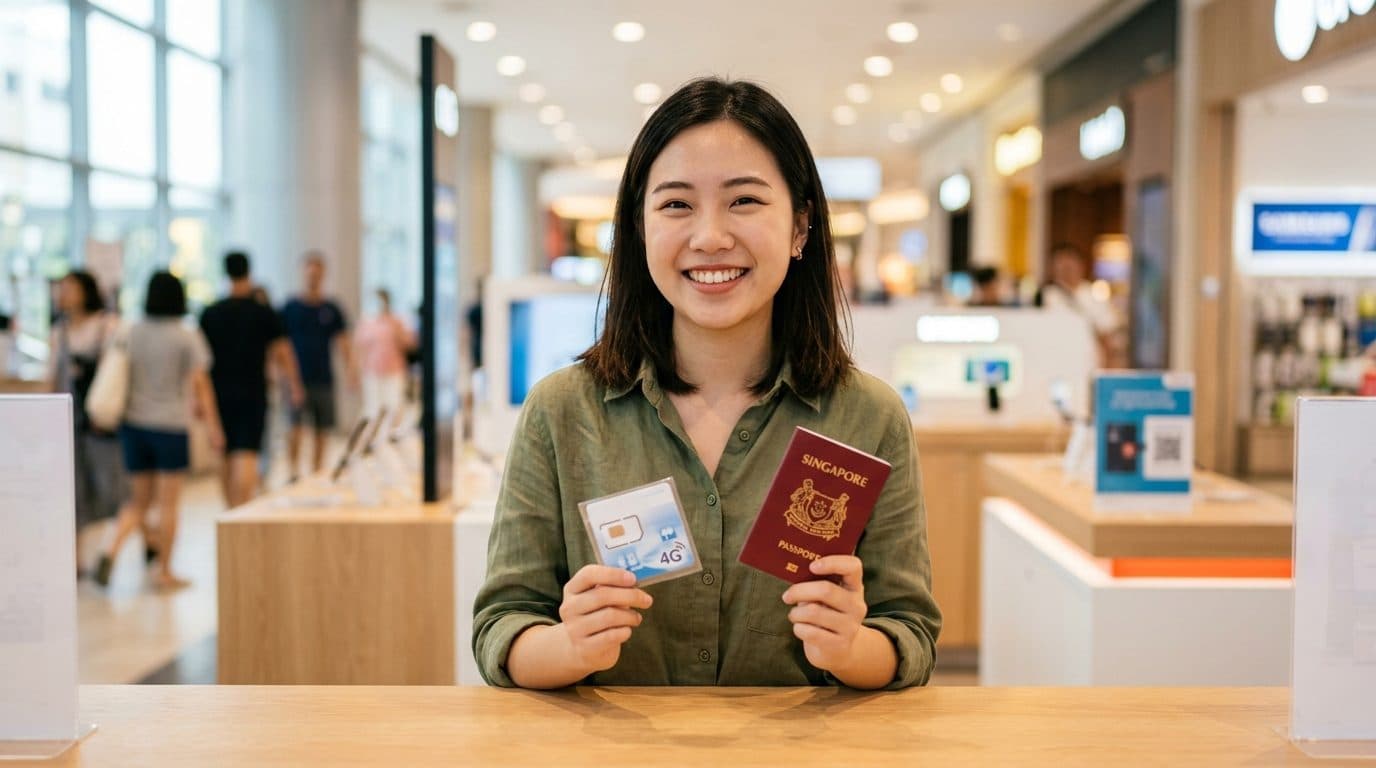
You cannot buy a SIM card in Singapore without proper identification. This is a strict government regulation to prevent fraud and ensure security. When you visit a carrier store or an authorized reseller, you must bring your original passport. The shop will scan your passport and verify your student pass or visa details. Do not rely on photocopies or digital photos of your documents; the physical document is mandatory.
Once your identity is verified, the store will register the SIM card under your name. This process is known as registration, and it is non-negotiable. Without it, the SIM will not work. It is also a good idea to have your student pass handy, even if the passport is the primary requirement, as some stores prefer to see proof of your student status to offer specific student bundles. Keep these documents safe, as you will need them for other parts of your life here, from opening bank accounts to renting accommodation.
Should You Try an eSIM Instead?
Many modern smartphones now support eSIM technology, which allows you to activate a plan digitally without a physical plastic card. This sounds incredibly convenient, and for travelers, it is often the best option. However, for students settling in for the long term, the physical SIM still holds advantages. Some older carrier kiosks and smaller resellers are still less familiar with eSIM setup processes compared to the straightforward physical swap.
Furthermore, if your phone breaks or gets lost, having a physical SIM makes it easier to transfer your number to a replacement device quickly. While major carriers do support eSIMs, the variety of prepaid data packages available for eSIMs can sometimes be more limited than the physical cards. If you are comfortable with technology and your phone is relatively new, an eSIM is a viable choice. Just ensure your phone is unlocked before you arrive, or you may face compatibility issues.
Data Habits and Saving Money on Campus
One of the biggest misconceptions students have is that they need massive data plans to survive in Singapore. In reality, most universities and hostels provide excellent, high-speed Wi-Fi coverage. At Sing Stay & Care, our rooms are equipped with reliable internet, and most campus libraries and common areas offer free access. Your mobile data is best used for commuting, making emergency calls, or quick check-ins when you are away from the campus.
To avoid overpaying, consider a plan that offers a moderate amount of data for daily use, perhaps enough for navigation and messaging apps. You can rely on Wi-Fi for streaming videos, large file downloads, or video calls with family. This hybrid approach keeps your monthly mobile costs very low. If you find yourself constantly running out of data, it usually means you are using your phone for heavy tasks that should be done on Wi-Fi. Adjusting your habits can save you money every single month, which adds up significantly over a semester.
Here is a quick checklist to help you choose the right plan for your first month:
- Bring your original passport and student pass to the store.
- Ask specifically for prepaid plans to avoid credit checks.
- Check if the plan includes unlimited local calls and SMS.
- Verify the data allowance matches your actual usage habits.
- Ask about the cost of international roaming if you plan to visit nearby countries.
- Ensure the network coverage is strong in your specific accommodation area.
- Keep the receipt for your SIM registration for future reference.
For more tips on settling into your new life, you can check our more student life guides which cover everything from banking to local transport.
Frequently Asked Questions
How long does it take to get a SIM card?
The process is usually quite fast. Once you have your documents ready, the registration and activation typically take about 15 to 30 minutes in a store. You can start using the SIM immediately after the activation is complete, provided your phone is unlocked and compatible.
Can I use my home country SIM in Singapore?
You can, but it will be extremely expensive due to international roaming charges. It is highly recommended to get a local SIM card as soon as you arrive. Most modern phones allow you to keep your old number for receiving verification codes while using a local SIM for data and calls.
What happens if I lose my SIM card?
If you lose your physical SIM, you must visit a carrier store with your passport to report the loss and request a replacement. They will deactivate the old SIM to prevent misuse and issue you a new one. This usually incurs a small replacement fee, but your number and plan remain intact.
Getting connected is just one small step in your journey to a comfortable student life. At Sing Stay & Care, we have been supporting international students since 2015 with safe, fully furnished rooms and a community that feels like home. We understand the stress of arriving in a new country, which is why we offer airport pickup and 24/7 caring support to help you settle in smoothly. If you are looking for a place to stay that prioritizes your safety and comfort, we invite you to browse our rooms. Have questions about the process or need assistance with your accommodation? Please leave us a message and our friendly team will be happy to help you get started.
Latest articles



Comments
Questions or tips of your own? Join the conversation.
No comments yet — be the first to share your thoughts.