

Managing Cultural Shock in Singapore: A Real Guide
Feeling overwhelmed by Singapore's fast pace? Learn practical ways to manage cultural shock, protect your mental health, and adapt successfully in your first year.
You imagined your first month in Singapore would be a montage of bright lights, instant friends, and effortless confidence. Instead, you are standing in a hawker centre, unsure which stall to pick, feeling a tightness in your chest that has nothing to do with the humidity. The reality of moving abroad is rarely as polished as the brochures. It is messy, confusing, and often quieter than you expected.
Many students focus heavily on logistics: visas, transport cards, and course registration. But the emotional adjustment is where the real work happens. Cultural shock is not just a buzzword; it is a physiological response to a new environment that demands new rules and rhythms. At Sing Stay & Care, we have supported students since 2015, and we know that adapting is not a straight line. It is a series of small wins and setbacks.
Understanding the Silent Stress of Adaptation
Singapore is a unique environment. It is clean, safe, and incredibly efficient. However, this efficiency can feel rigid to someone coming from a more relaxed cultural background. The expectation to follow specific rules, from queuing etiquette to public conduct, can create a low-level background stress that is hard to articulate. You might feel like you are constantly being judged, even when no one is looking.
This is where mental health often takes a hit. You are not just learning a new language; you are decoding social cues that do not match your previous experience. It is exhausting. Recognizing this fatigue is the first step. You are not failing because you find it hard; you are just processing a massive amount of new information. Give yourself permission to feel tired.
Practical Strategies for Daily Coping
Managing cultural shock requires small, consistent actions rather than grand gestures. Here are some practical ways to keep your balance in check:
- Establish a routine: Go to bed and wake up at similar times. Predictability in your daily structure reduces anxiety in an unpredictable environment.
- Create a sensory anchor: Keep a scent, music playlist, or food item from home that triggers a sense of safety.
- Limit social media comparison: Curated feeds often hide the struggles of other students. Mute accounts that make you feel inadequate.
- Engage in low-stakes interaction: Talk to your housekeeper or a neighbor. Small, non-judgmental conversations help you feel connected without the pressure of deep friendship.
- Move your body: Walk around the neighborhood. Physical movement helps process stress hormones and helps you learn the local geography intuitively.
- Journal your observations: Write down one thing that confused you and one thing that surprised you positively each day.
- Set boundaries with work: If you have a part-time job or heavy studies, define clear off-hours to protect your mental space.
- Reach out early: Do not wait until you are in crisis. Talk to a counselor or a trusted staff member when you first feel the weight of adaptation.
The Role of Community in Mental Well-being
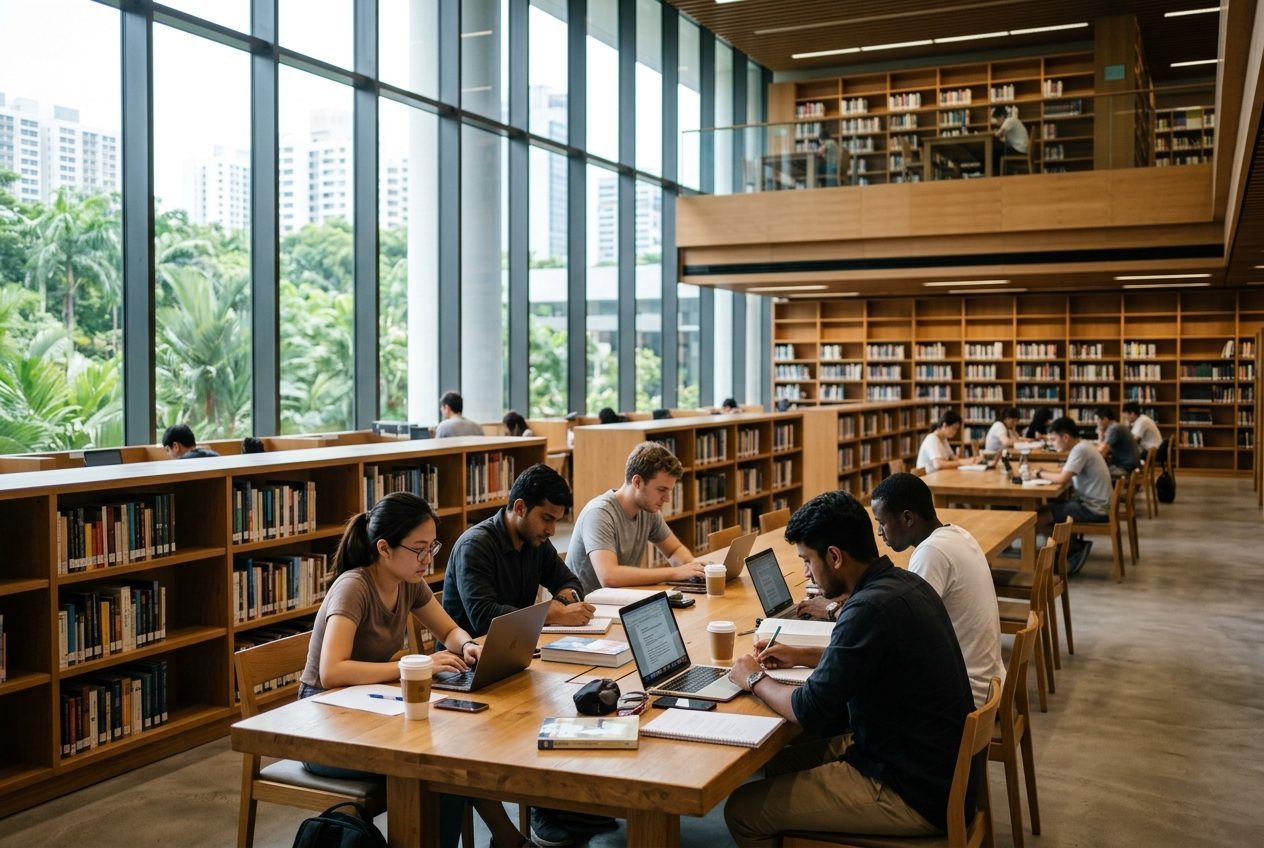
Isolation is the enemy of adaptation. When you are alone in a new country, your brain tends to amplify negative experiences. A shared living space can mitigate this significantly. Living with others who are also adjusting creates a natural support system. You do not need to be best friends with your roommates to benefit from their presence. Knowing that someone is nearby, that you can share a meal, or simply sit in the same living room, provides a sense of security.
At Sing Stay & Care, we design our spaces to encourage this casual connection. Our common areas are not just for waiting; they are for lingering. We encourage residents to share their cultural backgrounds, not as a performance, but as a way to understand one another. This exchange reduces the feeling of being an outsider. It turns "us and them" into "us all." You are not just a student here; you are a person with a story that others want to hear.
When to Seek Professional Help
There is a difference between feeling sad and experiencing a mental health crisis. If your feelings of isolation or anxiety persist for more than two weeks, or if they interfere with your ability to eat, sleep, or attend class, it is time to seek professional support. Singapore has a robust healthcare system, and counseling services are available to international students. Do not let pride prevent you from asking for help. Seeking support is a sign of strength, not weakness. It is an investment in your long-term well-being.
Remember, the goal is not to eliminate all discomfort. Discomfort is part of growth. The goal is to build resilience. By understanding the mechanics of cultural shock and equipping yourself with practical tools, you can move through the initial turbulence with more grace. You are building a version of yourself that is more adaptable and empathetic. This is a valuable skill that will serve you far beyond your time in Singapore. For more detailed advice on settling in, you can explore our more student life guides.
Frequently Asked Questions
Is cultural shock normal for international students in Singapore?
Yes, it is extremely common. Most students experience a period of adjustment where they feel disconnected or overwhelmed. It is a natural response to a significant life change and typically improves over time as you build routine and community.
How long does it take to adapt to living in Singapore?
There is no fixed timeline, but many students report feeling more settled after three to six months. This period allows you to learn the local norms, build friendships, and establish a daily rhythm that feels familiar.
Can living in shared accommodation help with mental health?
Yes, shared accommodation can provide a built-in support network. Having people around to talk to, even casually, reduces isolation. It offers a safe space to decompress and share experiences, which can significantly ease the stress of adapting to a new culture.
If you are looking for a place that understands these challenges, we are here for you. We provide safe, fully furnished rooms designed for comfort, and we offer airport pickup to help you start smoothly. Our 24/7 support team is always available to listen and assist. We invite you to browse our rooms to find a space that feels like home, and if you have any questions, please leave us a message. We are ready to support your journey.
Latest articles



Comments
Questions or tips of your own? Join the conversation.
No comments yet — be the first to share your thoughts.