
Homesickness Tips for Studying Abroad in Singapore
Feeling homesick? Discover practical homesickness tips for studying abroad. Learn how to build routines, connect locally, and prioritize student wellbeing.
"Is it normal to cry in the shower on my first week?" That is the most common question we hear from students arriving in Singapore. The short answer is yes, and you are far from alone in feeling that heavy ache for home while staring at a new ceiling.
Many students believe they should be instantly thrilled by the novelty of a new country, but the reality of moving to a different continent is often a mix of excitement and profound loneliness. At Sing Stay & Care, we have supported thousands of international students since 2015, and we know that admitting you feel homesick is the first step toward feeling better.
Why Homesickness Is a Normal Part of the Journey
It is easy to think of homesickness as a personal failure, a sign that you are not tough enough for life overseas. In truth, it is simply your brain reacting to a massive shift in your environment. You have left behind the familiar sounds of your neighborhood, the taste of your mother's cooking, and the comfort of your old bed. Your brain misses these anchors.
This feeling often peaks around the two-week mark, right after the initial adrenaline of arrival wears off. You might find yourself scrolling through photos of your old room late at night, feeling a sharp pang of regret. This does not mean you made a mistake coming to Singapore. It means you are human, and your heart is adjusting to a new rhythm.
Building a Routine That Grounds You
When everything feels new and chaotic, structure becomes your best friend. One of the biggest mistakes students make is letting their days blend into one another without purpose. Without a schedule, the hours stretch out, giving your mind too much time to wander back to home.
Create a simple rhythm for your week. Wake up at a consistent time, even on weekends. Prepare a specific breakfast you enjoy. Walk to campus or your local hawker center at the same time each day. These small, repetitive actions signal safety to your brain. They tell you that even though the city has changed, your day still has a predictable shape.
Try to anchor your evenings with a low-pressure activity. It could be reading a chapter of a book, cooking a simple meal with ingredients from a local wet market, or watching a show from your home country. The goal is to create a sense of control in your new environment.

Staying Connected Without Living Online
It is tempting to spend every free moment on video calls with friends and family back home. While staying in touch is vital for student wellbeing, living entirely in the past through a screen can trap you in your old life. You cannot build a new life if you are constantly checking out of your current one.
Set specific times for calls with home. Maybe it is Sunday morning or Friday evening. Stick to this schedule so you do not feel guilty for not being available 24/7. Outside of those times, try to resist the urge to scroll through social media feeds of your old life. Instead, focus on being present in your new surroundings.
Send a postcard or write a physical letter occasionally. These analog methods slow down communication and make it feel more intentional. They also give you a reason to explore your neighborhood to find a post office or a nice stationery shop, which is a small adventure in itself.
Finding Community in Your Accommodation
Many students feel isolated because they stay in their rooms, assuming everyone else is busy. The truth is, most of your neighbors are feeling exactly the same way you are. Your student accommodation is the perfect place to start building a new support network.
Look for the common areas in your building. These are designed for interaction. Sit in the lounge with a book or a cup of tea. Smile at the person in the kitchen. It often takes just one small conversation to break the ice. You might find a roommate from a different country who also misses their family, and suddenly you have a study partner and a friend for life.
We often see students bond over shared meals. Cooking together is a powerful way to share culture and create memories. If you are unsure where to start, check our more student life guides for ideas on organizing potlucks or cultural exchange nights.
Practical Steps to Ease the Transition
Sometimes, you need a concrete list of actions to take when the feelings of homesickness hit hard. Here are five practical steps we recommend to our students when they reach out for help:
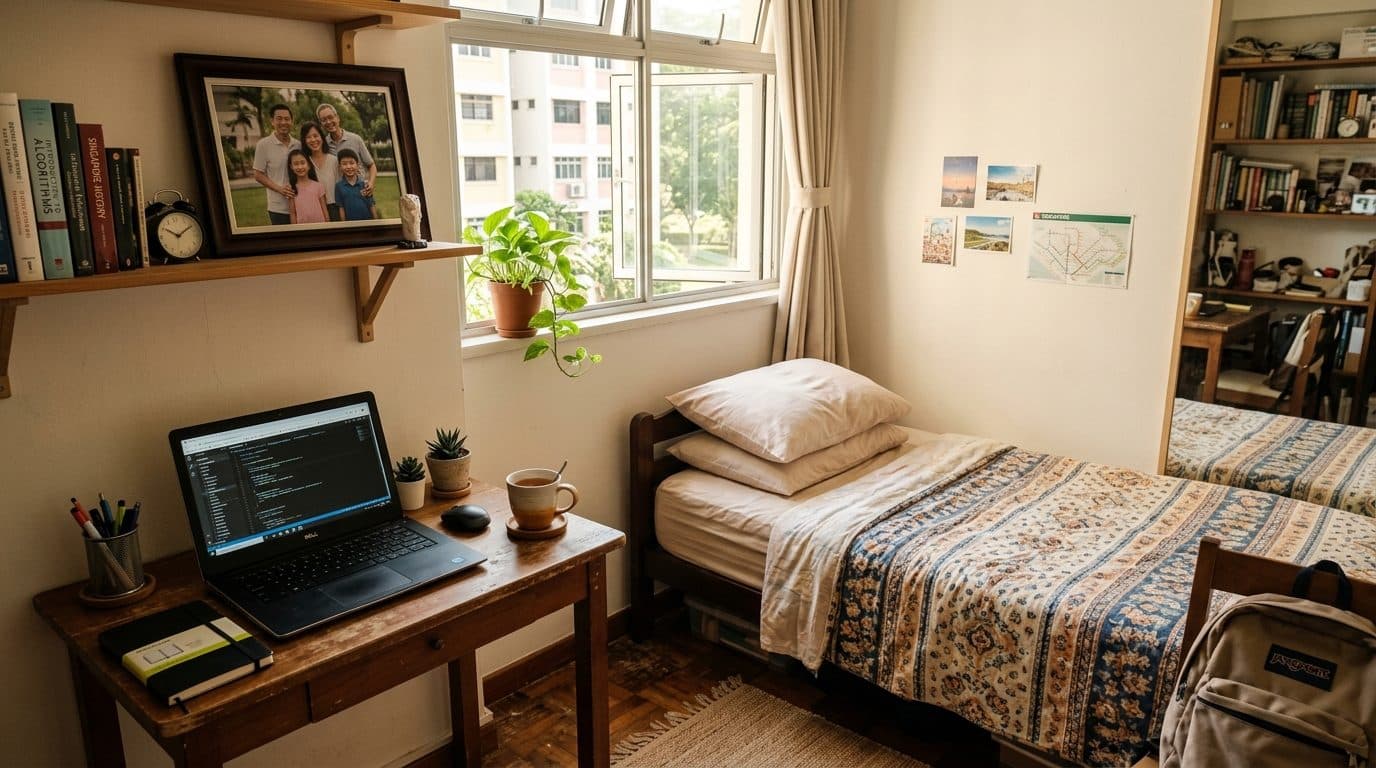
- Decorate your room with familiar items like photos, a favorite blanket, or a scent that reminds you of home.
- Explore one new spot in Singapore every weekend, even if it is just a different park or library.
- Join a club or society related to your hobbies to meet people with shared interests.
- Keep a journal to track your feelings and celebrate small wins, like ordering food in a new language.
- Exercise regularly to boost your mood and release stress hormones naturally.
Remember that these steps are not about fixing everything overnight. They are small bricks you lay down to build a foundation for your new life. Be patient with yourself as you construct this new reality.
When to Seek Extra Support
There is a difference between normal homesickness and feelings that are affecting your ability to function. If you find that you cannot eat, sleep, or get out of bed for days, it is time to reach out. You do not have to struggle in silence.
Singapore has excellent mental health resources for students. Your university likely has a counseling center, and there are many community organizations dedicated to supporting international students. At Sing Stay & Care, our team is also here to listen. We are not just property managers; we are a support system that cares about your student wellbeing.
Frequently Asked Questions
How long does homesickness usually last?
There is no set timeline, but for many students, the acute phase of homesickness fades within the first few months as they build a routine and make new friends.
Is it bad to talk about my feelings with new friends?
Not at all. Sharing your vulnerability often strengthens bonds. Many students appreciate honesty and may share their own similar experiences, creating a sense of shared understanding.
What if I feel like I made the wrong choice to study abroad?
This doubt is common during the adjustment period. Give yourself time to settle in. Often, once the routine is established and the novelty wears off, the decision feels right again.
Starting your journey abroad is brave, and feeling homesick does not make you weak. It makes you human. We are here to ensure your home away from home is a place of safety, comfort, and genuine care. If you are ready to find a space where you can settle in and thrive, we invite you to browse our rooms to see our fully furnished options.
Whether you need a warm welcome, a safe place to rest, or just someone to talk to, our team is ready to help. We offer airport pickup to ease your arrival and provide 24/7 support for any concerns. Please leave us a message today, and let us help you make Singapore your new home.
Latest articles



Comments
Questions or tips of your own? Join the conversation.
No comments yet — be the first to share your thoughts.