

Grocery Shopping Singapore: Cheap Groceries for Students
Master grocery shopping Singapore with our guide to cheap groceries, wet markets, and house brands. Cook smarter and save money as a student.
Let's be honest: the first week of grocery shopping in a new country is genuinely annoying. You walk into a supermarket, stare at a wall of unfamiliar brands, and suddenly realize you have no idea which rice is broken or why the eggs cost different prices in different aisles. It feels like a test you didn't study for. But here is the good news: once you figure out the rhythm of Singapore, it becomes one of the easiest parts of student life. We have seen thousands of students master this, and you can too.
Where to Shop: Supermarkets vs Wet Markets
Singapore offers a unique blend of modern convenience and traditional markets. For most students, the strategy involves using both. Large supermarket chains are everywhere, offering air-conditioned comfort and everything you need in one trip. They are perfect for stocking up on dry goods, toiletries, and frozen meals. However, if your goal is finding the absolute cheapest groceries, the wet markets are where the magic happens.
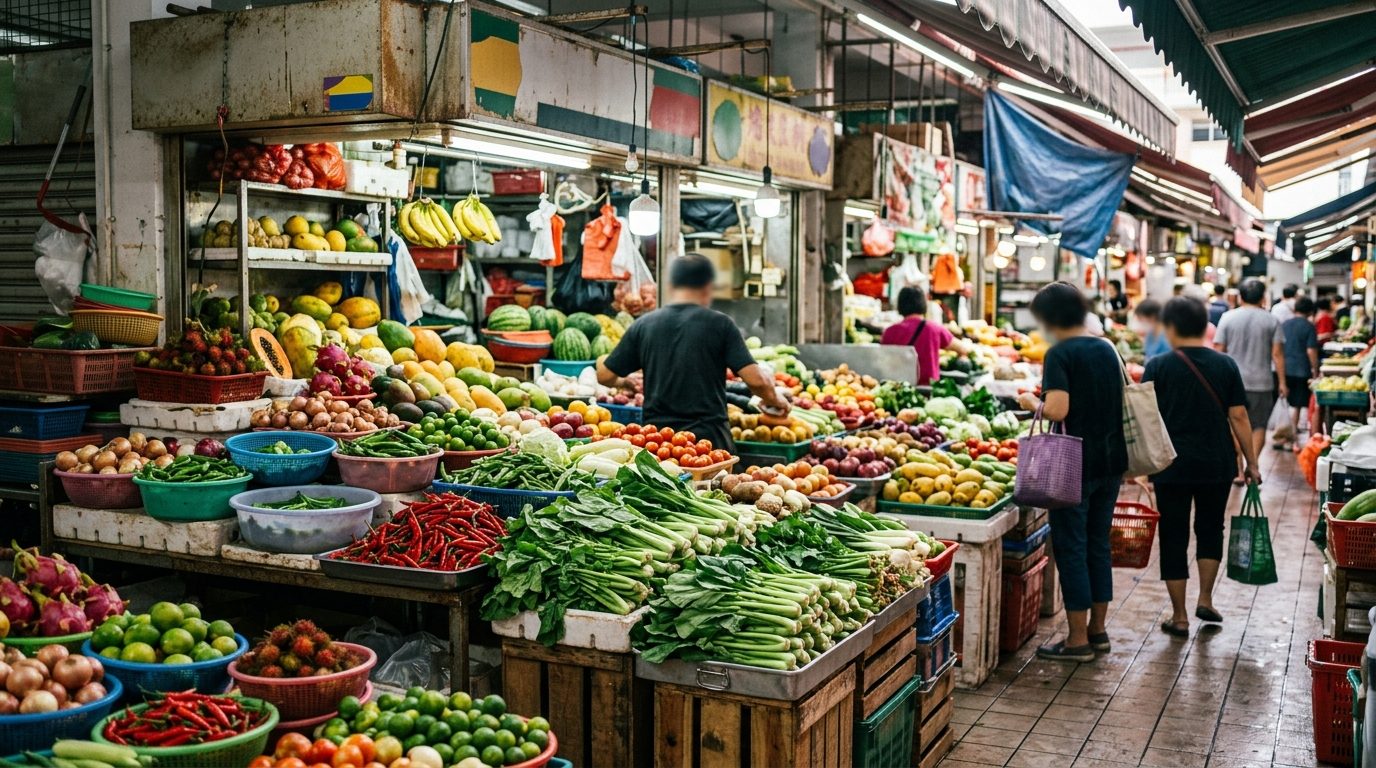
Wet markets might look intimidating at first with their open-air stalls and piles of fresh produce, but the prices are significantly lower than in any store. You can find seasonal fruits and vegetables for a fraction of the cost. The trick is to go early in the morning or late in the afternoon when vendors often discount items to clear their stock. Don't be afraid to ask for help; most stall owners are incredibly friendly and happy to help you pick out the ripest mangoes or firmest fish.
House-Brand Swaps and Smart Shopping
One of the quickest ways to cut your food bill is to stop buying name-brand products. In Singapore, the house brands available at major chains are almost identical to the premium labels but cost much less. This is not a compromise on quality; it is simply smart shopping. From cooking oil to pasta sauce, the difference in taste is often negligible, but the savings add up quickly over a semester.
Look for the store-brand rice, flour, and canned goods. You will also find that buying in bulk is often cheaper, provided you have the storage space. If you are living in a shared room or a small unit, coordinate with your housemates to buy larger packs of toilet paper or rice and split the cost. This simple habit can save you a significant amount of money every month without changing your diet.
Cooking as a Student in Shared Kitchens
Cooking as a student is the best way to save money, but it requires a bit of organization, especially in a shared kitchen. The biggest mistake students make is buying ingredients for a single meal that end up spoiling before they can be used. Instead, plan your meals for the week. Decide on two or three main dishes you can rotate, and buy ingredients that can be used across multiple meals.
For example, buy a large bag of chicken breast and use it for a stir-fry one night, a curry the next, and a simple grilled dinner later in the week. This reduces waste and keeps your shopping list predictable. Also, invest in a few basic cooking tools: a good non-stick pan, a sharp knife, and a cutting board. You do not need a full professional setup, but having the right basics makes the process much faster and less frustrating.
Storage Etiquette and Community Living
Living with others means sharing space, and the kitchen is often the most contested zone. Good storage etiquette is the key to a harmonious living environment. Always label your containers with your name and the date you cooked the food. This prevents confusion and ensures that no one accidentally eats your leftovers.
Keep your fridge organized by assigning specific shelves or bins to each person if possible. If you run out of space, communicate with your housemates before adding more items. It is also crucial to clean up immediately after cooking. Leaving dirty dishes or spilled oil not only attracts pests but also creates tension among roommates. A clean kitchen is a happy kitchen, and it ensures everyone is willing to cook again.
When Eating Out is Actually Cheaper
There is a common belief that cooking at home is always the cheapest option. While this is generally true, Singapore has a unique food culture where eating out can sometimes be more economical than cooking. Hawker centers are legendary for their affordable, high-quality meals. A plate of noodles or a simple rice dish can cost a very small amount, often less than the ingredients needed to cook the same meal at home when you factor in electricity, gas, and the cost of buying small quantities of ingredients.
If you are short on time or energy after a long day of classes, heading to a nearby hawker center is a perfectly valid choice. You get a hot, delicious meal without the hassle of shopping, cooking, or cleaning. It is also a great way to experience local culture and try new foods. Just be mindful of your budget and treat it as a strategic choice rather than a daily habit.
- Plan your meals for the week to avoid impulse buys and food waste.
- Shop at wet markets for fresh produce and supermarkets for dry goods.
- Switch to house-brand products for staples like rice, oil, and pasta.
- Buy in bulk with housemates to save money on large items.
- Label all food containers with your name and date in the shared fridge.
- Clean your cooking area immediately after use to maintain good relationships.
- Use hawker centers for quick, affordable meals when time is tight.
- Check for discounts on fruits and vegetables at the end of the day.
Frequently Asked Questions
Is it expensive to live in Singapore on a student budget?
It can be, but not if you are strategic. By cooking at home, shopping at wet markets, and utilizing affordable transport options, you can manage your budget effectively. Many students find that their biggest expenses are rent and transport, so saving on food can make a huge difference.
Where can I find the cheapest groceries in Singapore?
The cheapest groceries are usually found at wet markets for fresh produce and at large supermarket chains for dry goods and house brands. Comparing prices between different stores and buying in bulk with friends can also lead to significant savings.
How can I cook healthy meals on a budget?
Focus on simple recipes using seasonal vegetables, rice, and affordable proteins like eggs or tofu. Batch cooking and meal prepping help you avoid expensive takeout and ensure you always have a healthy option ready to eat.
Mastering the art of grocery shopping is a skill that will serve you well beyond your time in Singapore. It teaches you to be resourceful, budget-conscious, and adaptable. If you are looking for a place where you can practice these skills in a supportive environment, we invite you to browse our rooms. We offer safe, fully furnished accommodations designed for international students, with shared kitchens that encourage community and cooking. If you have any questions about our facilities or need help with anything, feel free to leave us a message. Our team provides 24/7 support and even offers airport pickup to ensure your arrival is smooth and stress-free. We are here to help you settle in and make the most of your student life.
Explore more student life guides on our blog.
Latest articles



Comments
Questions or tips of your own? Join the conversation.
No comments yet — be the first to share your thoughts.